

Montessori and public schools are two of the most common educational options for caregivers in the United States. While both aim to provide children with quality education, they differ significantly in their approach and philosophy. Choosing between Montessori and traditional public school can be a daunting task and it is essential to understand the differences between the two education models to make an informed decision.
Montessori schools are known for their child-centered approach, which emphasizes independence, individualized learning, and hands-on experiences. On the other hand, public schools follow a more traditional approach, with a focus on teacher-led instruction and standardized testing. While both types of schools have their advantages and disadvantages, the decision ultimately depends on the needs and preferences of the child and their family. We will explore the differences between Montessori and public schools to help you make an informed decision about your child’s education.
Montessori vs Public School: Understanding the Key Differences
When it comes to choosing the right education model for your child, there are a lot of factors to consider. Two popular options are Montessori and public schools. While both aim to provide quality education, they differ in their approach, philosophy, and curriculum.
Montessori Education

Montessori education is based on the philosophy of Dr. Maria Montessori, an Italian physician and educator. The Montessori approach emphasizes individualized learning, freedom of choice, and hands-on, experiential learning. In a Montessori classroom, students work at their own pace and choose activities that interest them. The teacher acts as a guide, providing support and encouragement as needed.
Montessori classrooms are designed to be child-centered and focused on the development of the whole child. Children are encouraged to learn through exploration and discovery, rather than through direct instruction. Montessori schools typically have mixed-age classrooms, where children of different ages work together and learn from each other.
Related: What Is Montessori School and Is It Right For Your Child?
Traditional Public Education

Public education is the most common form of education in the United States. Public schools are funded by the government and are open to all students, regardless of their background or ability. Public schools follow a standardized curriculum and are required to meet certain standards set by the state or federal government.
Traditional public schools typically offer a more structured approach to learning, with teachers providing direct instruction and students working together in groups. Classrooms are usually organized by age, with each grade level following a set curriculum.
Key Differences
The table below summarizes some of the key differences between Montessori and traditional public schools:
| Montessori Education | Public School Education |
|---|---|
| Emphasizes individualized learning | Follows a standardized curriculum |
| Encourages hands-on, experiential learning | Provides direct instruction |
| Offers freedom of choice | Structured approach to learning |
| Mixed-age classrooms | Classrooms organized by age |
| Child-centered | Teacher-centered |
The Montessori Philosophy and Method of Education
The Dr. Maria Montessori philosophy began as an early childhood education movement. Dr. Montessori was a pioneer in the early childhood education movement, and her work has had a profound impact on the way we think about teaching and learning.
Dr. Montessori believed that children are naturally curious and eager to learn, and that the role of the teacher is to provide a prepared environment that allows children to explore and discover the world around them. She emphasized the importance of hands-on learning and believed that children learn best through direct experience.
The Montessori Classroom Environment
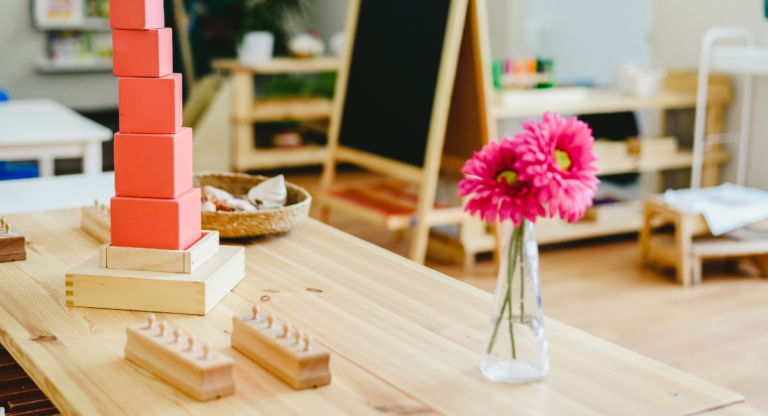
The Montessori classroom is designed to facilitate the child’s natural development. The environment is carefully prepared to meet the needs of the children, with materials that are specifically designed to promote learning and exploration. The classroom is organized into different areas, such as language, math, and practical life, and children are free to choose the activities that interest them.
Materials in the Montessori classroom are designed to be self-correcting, so that children can learn from their mistakes and work independently. The classroom is also designed to be aesthetically pleasing, with natural materials and soft lighting that create a calm and peaceful atmosphere.
Role of the Montessori Teacher
In the Montessori classroom, the role of the teacher is to observe and guide the children, rather than to direct their learning. The teacher is trained to recognize the needs of each child and to provide individualized instruction as needed. The teacher also acts as a facilitator, helping children to develop social skills and encouraging them to work together and help each other.
The Montessori teacher is highly trained and knowledgeable about child development and educational philosophy. They are responsible for creating a safe and nurturing environment that allows children to learn and grow at their own pace.
Overall, the Montessori philosophy and method of education emphasizes the importance of hands-on learning, individualized instruction, and a prepared environment that meets the needs of the child. By providing children with the tools and resources they need to explore and discover the world around them, the Montessori approach helps to foster a lifelong love of learning.
Montessori Levels of Education
Montessori education is a popular choice for many parents who want their children to receive a personalized, child-centered education. Montessori schools focus on the individual child’s needs and interests, allowing them to learn at their own pace and in their own way. Montessori schools provide learning environments for children from preschool up to high school.
Montessori Preschool and Primary Programs
Montessori preschool and primary programs are designed for children from toddler age up to six. The Montessori curriculum for preschoolers focuses on developing fine motor skills, social development, and independence. The children learn through hands-on activities and exploration, with the teacher acting as a guide rather than a lecturer.
In a Montessori preschool classroom, children work independently or in small groups on activities that are designed to meet their individual needs. The classroom is organized into different areas, such as practical life, sensorial, language, and math. Children are free to choose their activities and work on them for as long as they want, as long as they are respectful of others and the materials.
Montessori Elementary Programs
Montessori elementary programs are designed for children between the ages of six and twelve. The Montessori curriculum for elementary students builds on the foundation laid in the preschool and primary years and emphasizes critical thinking, problem-solving, and collaboration. The children work on long-term projects that integrate different subjects and require them to apply their knowledge and skills in new ways.
In a Montessori elementary classroom, children work in small groups or independently on projects that are of interest to them. The teacher acts as a facilitator, guiding the children towards their goals and helping them to develop a deep understanding of the concepts they are studying. The classroom is organized into different areas, such as language arts, math, science, and cultural studies.
Overall, Montessori education for younger children emphasizes the individual child’s needs and interests, allowing them to develop at their own pace and in their own way. The Montessori curriculum focuses on developing fine motor skills, social development, and critical thinking skills. Montessori preschool and elementary programs provide a child-centered, personalized education that prepares children for a lifetime of learning and success.
Montessori Middle School Programs
Montessori education is not just for young children. Montessori schools also offer programs for older students, including middle school. These programs are designed to help students develop academic skills, executive function, and other skills needed for success in higher education and beyond.
Montessori middle school programs typically serve students in grades 7 and 8. These programs are designed to provide a learning environment that is tailored to the needs of older students. In a Montessori middle school, students work in multi-age classrooms and are encouraged to take on leadership roles within the classroom community.
One of the key benefits of Montessori middle school programs is that they help students develop executive function skills. These skills include time management, organization, and self-regulation. By working in a self-directed learning environment, students learn to take responsibility for their own learning and develop the skills needed to succeedin life.
Montessori High School Programs
Montessori high school programs are designed to provide students with a high-fidelity learning environment that is tailored to their needs. These programs typically serve students in grades 9 through 12 and are designed to help students develop the academic skills and executive function skills needed for success in college, career, and beyond.
In a Montessori high school program, students work in multi-age classrooms and are encouraged to take on leadership roles within the classroom community. They also have the opportunity to work on independent research projects and to participate in internships and other real-world learning experiences.
Research has shown that Montessori students tend to perform well academically and develop strong executive function skills. In one study, Montessori students outperformed their peers on measures of academic achievement, executive function, and social and emotional development.
Traditional Public Schools
Traditional public schools are the most common form of education in North America. These schools are funded by the government and provide free education to all students. They follow a standardized curriculum that is designed to meet state and federal educational standards. The curriculum is typically taught in a classroom setting with one teacher instructing a group of students.
One of the advantages of traditional public schools is that they offer a wide range of extracurricular activities such as sports, music, drama, and clubs. These activities provide students with opportunities to explore their interests and develop social skills. Traditional public schools also have a larger student population, which can provide a more diverse learning environment.
However, traditional public schools often have larger class sizes, which can make it difficult for teachers to give individual attention to each student. The standardized curriculum may not meet the needs of every student, and those who struggle may not receive the support they need. Additionally, traditional public schools often have strict disciplinary policies that may not be effective for all students.
Overall, traditional public schools can provide a solid education for students, but they may not be the best fit for every child. Caregivers should consider their child’s individual needs and learning style when deciding whether to enroll them in a traditional public school or a Montessori school.
Related: Is Traditional Public School the Best Option for Your Child?: A Comprehensive Guide
Public Montessori Charter Schools
If you feel that a Montessori style education is more appropriate for your child, but the cost of a private school is daunting, explore public Montessori charter schools.
Public Montessori education has been gaining popularity in recent years, with more than 500 public schools nationwide offering Montessori programs. The first public Montessori program was established in 1960 in St. Paul, Minnesota. Since then, Montessori programs have expanded to include public charter schools and school districts across the United States.
Public Montessori programs offer several benefits to students, including personalized, independent learning and mixed-age groups. Students are encouraged to learn at their own pace, and teachers act as guides, rather than lecturers. This approach fosters a love of learning and helps students develop critical thinking skills.
Public Montessori programs also offer a diverse learning environment. Students from all backgrounds and abilities are welcome, and the Montessori approach emphasizes respect for others and the environment. This creates a sense of community and helps students develop social and emotional skills.
Related: What Are Charter Schools: A Guide to Determine If They Are Right for Your Child
Challenges of Public Montessori Programs
One of the biggest challenges facing public Montessori programs is the lack of funding. Montessori materials can be expensive, and many public schools do not have the resources to provide them. Additionally, not all public schools have trained Montessori teachers, which can limit the effectiveness of the program.
Another challenge facing public Montessori programs is the need to meet state standards. While Montessori programs are designed to be flexible and adaptable to the needs of individual students, they must also adhere to state standards and testing requirements. This can create tension between the Montessori approach and the traditional public school system.
Despite these challenges, public Montessori programs continue to grow and thrive. With federal funding available for Montessori charter schools and the National Center for Montessori in the Public Sector providing support and resources, more public school teachers and students are benefiting from the Montessori approach in their classrooms.
Montessori vs Traditional Public School: Academic Achievement and Test Scores
When it comes to academic achievement and test scores, many parents wonder if a Montessori education is better than a traditional public school education. While there is no clear-cut answer, research has provided some insights into the effectiveness of Montessori education.
A 2017 study found that the gap between Montessori students and traditional public school students widens in favor of Montessori students based on the number of years the student has attended a Montessori school. The benefits of a Montessori education compound with each additional year. Another study published in the Journal of School Choice in 2019 found that Montessori students had higher scores on standardized tests than their peers in traditional schools.
It is worth noting, however, that test scores and academic achievement are not the only indicators of success. Montessori education emphasizes the development of the whole child, including their social and emotional well-being. Research has shown that Montessori students tend to have better social and emotional skills than their peers in traditional schools.
One reason for the differences in academic achievement and test scores may be the Montessori approach to learning. Montessori classrooms are designed to be child-centered and allow students to work at their own pace. This approach may lead to a deeper understanding of concepts and better retention of information.
It is important to keep in mind that every child is unique and may thrive in different educational environments. While Montessori education may be a good fit for some children, others students, who prefer more structured learning, may thrive in a traditional school setting. Parents should consider their child’s individual needs and learning style when making the decision between Montessori and traditional education.
Overall, while Montessori education has shown promise in terms of academic achievement and test scores, it is important to consider the whole child and their individual needs when making educational decisions.
Montessori vs Traditional Education: Social and Life Skills Development
One of the main differences between Montessori and traditional education is the approach to social and life skills development. In traditional education, students are often taught social skills through structured activities and group work. In contrast, Montessori education emphasizes social development through unstructured play and peer-to-peer learning.
Montessori schools encourage students to work together and solve problems collaboratively. Children are encouraged to take turns, share resources, and communicate effectively with one another. These skills are developed naturally through the Montessori method, which allows children to work at their own pace and learn from one another.
In traditional education, social development is often limited to structured activities and group work. While these activities can be effective in teaching social skills, they may not be as effective as the Montessori approach. Traditional education also tends to focus more on individual achievement, rather than collaboration and teamwork.
Life skills development is also a key component of Montessori education. Children are encouraged to take responsibility for their own learning and to develop self-discipline and time management skills. They are also taught practical life skills, such as cooking, cleaning, and gardening.
In traditional education, life skills development is often limited to basic skills such as reading, writing, and arithmetic. While these skills are important, they may not be sufficient for success in the real world. Classes such as woodshop and home economics have been removed from most public schools due to budget cuts. Montessori education provides children with a more well-rounded education that prepares them for success in all areas of life.
Overall, both Montessori and traditional public school education have their strengths and weaknesses when it comes to social and life skills development. However, the Montessori approach may be more effective in developing these skills in a natural and holistic way.
Montessori vs Traditional Education: Teaching Methods and Learning Environments
Montessori and traditional public education differ in their teaching methods and learning environments. In a traditional classroom, the teacher is the center of attention, and students are expected to follow a set curriculum at a predetermined pace. On the other hand, Montessori classrooms focus on individualized learning and freedom of choice. Students work at their own pace and choose activities that interest them.
One of the primary differences between Montessori and traditional education is the use of hands-on learning. In a Montessori classroom, students learn through exploration and discovery. They have access to a wide range of materials and are encouraged to use them to learn. In contrast, traditional classrooms rely on lectures and textbooks to deliver information.
Another difference is the size of the groups. Traditional classrooms often have larger class sizes, with one teacher for many students. Montessori classrooms, on the other hand, have smaller groups, with each teacher responsible for a smaller number of students. This allows for more individualized attention and support.
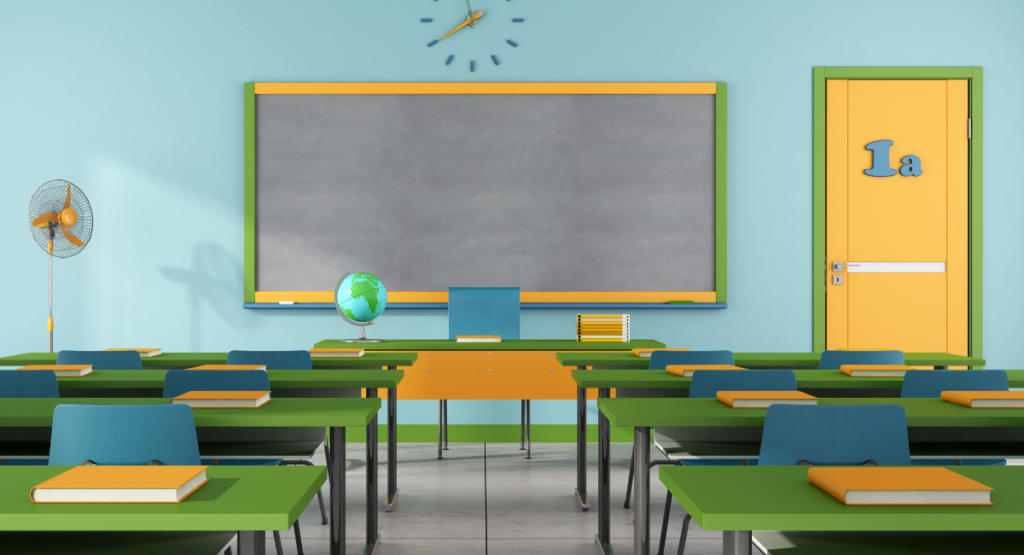
The learning environment is also different in Montessori and traditional public school classrooms. Montessori classrooms are designed to be child-centered environments. They are typically minimalistic and neutral-colored, with a wide range of materials and activities available. Traditional classrooms are often more structured, with rows of desks and fewer interactive materials available.
When it comes to choosing between Montessori and public schools, there is no one-size-fits-all answer. Each child is unique, and what works for one may not work for another. It’s important to consider the needs of your child, your family’s values, the need for extracurricular activities and sports, and the resources available to you.
Montessori schools offer a child-centered approach to education, focusing on individualized learning, freedom of choice, and hands-on experiences. They are often smaller in size, with a strong sense of community and a holistic approach to education. However, they can be expensive and may not be available in all areas.
Public schools, on the other hand, offer a more traditional approach to education, with a structured curriculum and standardized testing. They are often larger in size, with a diverse student body and a wider range of extracurricular resources. They are also free and available to all children.
Ultimately, the decision between Montessori and public schools comes down to what is best for your child. Consider their learning style, personality, and interests, as well as your family’s values and resources. Talk to other parents, teachers, and education professionals to get a better sense of what each option has to offer.
No matter which path you choose, remember that education is a lifelong journey. Encourage your child to explore their passions, take risks, and embrace new challenges. With the right support and guidance, they can achieve great things and reach their full potential.