

The Amara Berri System is an educational model that has been gaining popularity in recent years in Europe and slowly making its way to North America. This system uses everyday situations for learning to develop competencies. It establishes that students must learn as researchers, while teachers act as guides in this process, respecting each student’s learning pace and guiding them based on their abilities.
Since 1990 when the Basque Government recognized the innovative nature of the school, the Amara Berri System has become a benchmark and is a key component of San Sebastian, Spain’s intercultural city approach.
The Amara Berri System is based on the idea that children learn best when they are engaged in activities that are relevant to their lives. This approach emphasizes the importance of practical, hands-on learning, and encourages students to take an active role in their education. The system is flexible, allowing teachers to adapt their teaching methods to meet the needs and interests of individual students. Students can work at their own pace and are not limited by the constraints of a traditional and more structured classroom setting.
If you are considering the Amara Berri System for your child, it is important to understand how it works and what it can offer. While this approach may not be suitable for every child, it can be an excellent option for students who thrive in a hands-on, practical learning environment.
What Is The Amara Berri Education Model?
The Amara Berri Education Model is an innovative approach to education that emphasizes the development of students’ emotional intelligence through a method of teaching called “edu-communication.” This approach is based on research that suggests that traditional education models fail to adequately address the emotional needs of students, leading to a gap in education and development.
The Amara Berri Education Model was developed by the Escuela Pública Amara Berri in San Sebastian, Spain. The school’s approach to education has received international recognition for its success in promoting academic achievement and emotional well-being among its students.
Approach To Teaching The Amara Berri System
The Amara Berri Education Model is built on evidence supporting emotional intelligence’s importance in academic and personal development. The model emphasizes collaborative, project-based learning that integrates STEM (science, technology, engineering, and math) subjects into real-world examples and uses.
The pedagogy of the Amara Berri Education Model is centered around the idea of “edu-communication.” This approach involves the use of communication as a tool for learning, with a focus on developing students’ emotional intelligence. The model focuses on creating a safe and supportive learning environment where students feel comfortable expressing their emotions and engaging in meaningful dialogue with their teachers and peers.
The Amara Berri Education Model is an innovative and practical approach to education that has set a benchmark for other schools to follow. Its emphasis on emotional intelligence and integrating STEM subjects into real-world contexts has proven to be highly successful in promoting academic achievement and emotional well-being among students.
Is The Amari Berri Model Right For Your Child?
The Amara Berri Model is an educational innovation that focuses on the development of intercultural place-making skills and student-led education. It has been adopted by 20+ schools in the San Sebastian area of Spain and is a key component of the city’s intercultural integration policy model. Let’s talk about whether the Amara Berri Model is right for your child.
Community Focus
At the heart of the Amara Berri Model is the belief that education should be community-centric. The education model emphasizes the importance of equal and active participation within the community where students live. The model creates an environment that encourages positive intercultural encounters and exchanges by fostering a sense of community.
Classroom Diversity
The Amara Berri Model recognizes the importance of diversity in the classroom and then takes it a step further. The education model promotes the development of intercultural approaches that fulfill the needs of a diverse population. By embracing diversity, the education system creates an environment that encourages students to learn from and collaborate with each other.
Intercultural Community Approach
Research evidence suggests that the Amara Berri system promotes intercultural integration and improves academic performance. The model has been shown to improve mathematics and language understanding, and students who learn in this way are more likely to pursue higher education.
During the COVID-19 pandemic, the Amara Berri Model adapted by using radio and television programs, personal websites, and other digital tools to support student learning. The model’s emphasis on community and student-led education has helped to maintain a sense of connection and engagement during a challenging time.
While the Amara Berri model may not be right for every child, it offers a promising approach to education that can help to promote intercultural integration and improve academic performance. If your family is community-oriented, enjoys group projects and problem-solving, and embraces diversity, this education model may be perfect for you and your student.
What Does An Amara Berri Classroom Look Like?
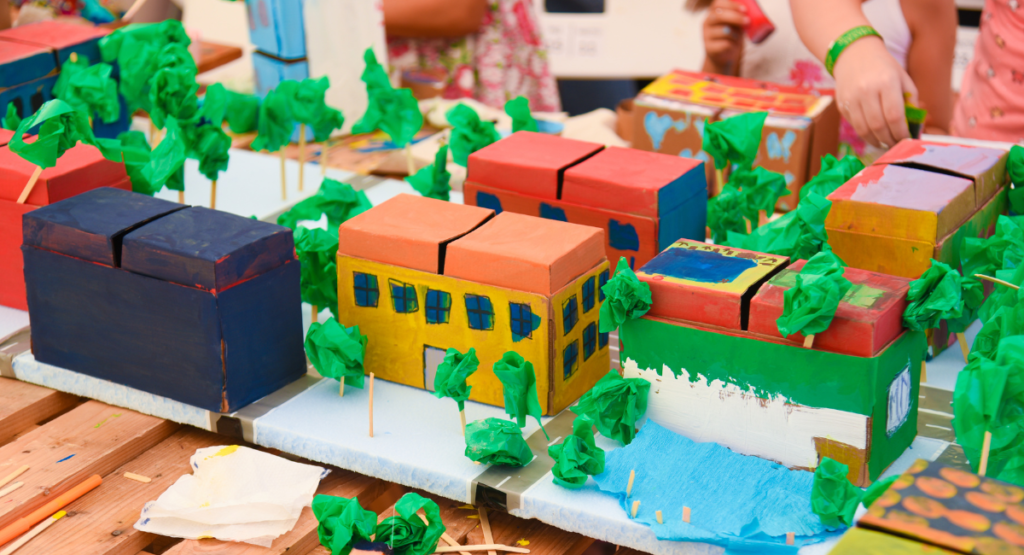
At the center of the Amara Berri education model is the idea that learning should be practical and relevant to students’ lives. In primary schools, this means that students don’t simply follow a textbook, but instead enact their learning as if they were citizens in the community outside. The classroom is set up to resemble a street, with students taking on different roles and responsibilities within their community.
Students might run small businesses in the classroom, such as a bakery or grocery store. This allows them to learn about organization, problem-solving, math, and money management in a practical and engaging way. Language classes might involve students creating and performing skits or plays that reflect the community’s diversity.
The Amara Berri education model extends beyond the classroom, providing opportunities for various extra-curricular activities that complement their learning. Radio and television programs are produced by students, allowing them to learn about media production and communication while also sharing their ideas with a broader audience.
Students have the opportunity to create personal websites, Facebook pages, or Twitter accounts to share their work and connect with others. Tools like Powtoon, Hacks, and Prezi might be used to create engaging presentations and projects. Regular updates and communication with parents and the wider community is a vital part of the education model.
The Amara Berri education model is a unique and innovative approach to learning that emphasizes practical, student-led education and positive intercultural encounters and exchanges. While it may not fit every child, it offers a compelling alternative to traditional educational models. It has the potential to inspire and engage your student in new and exciting ways.